P is for Prison
And
R is for River
R is for Retail
And
M is for Mall (Church Street Mall)
And
T is for Tudor Gatehouse
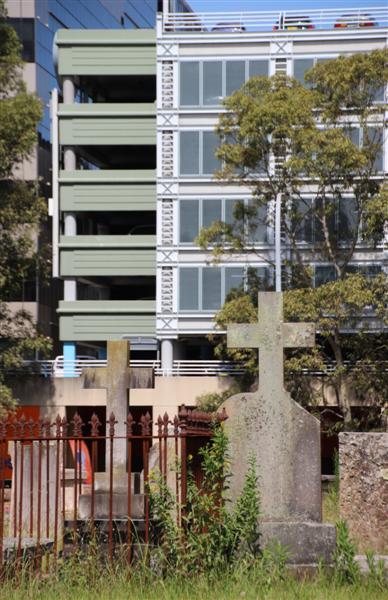
T is for Tombstones
And "that's all folks"
P is for Prison
The Parramatta Prison or to use its correct title, "Parramatta Correctional Centre" is the third to serve the area. The first made of timber logs (1796-1799) burnt down. No surprises there. The second made of stone (1800-1841) and finally this gaol first began construction in 1835 and was completed in 1856. It was home to inmates from 1841 and going by the note on the front gate is no longer operational.
 |
| Someone should have told this guy the gaol was closed before he arrived with all his worldy belongings |
R is for River, The Parramatta River
The Upper Parramatta River Catchment was originally home to the Dharug Aboriginal people, clan
Burramatta, from which the name Parramatta came, (
burra meaning place and
matta meaning eels). In 1788 Governor Phillip, encouraged establishment of new farms on the low lying river flats by giving land and convicts to the white settlers. Lake Parramatta provided a clean and reliable water supply for the growing of crops and the township flourished, but not without cost to local indigenous people. Hostilities between the local Burramatta clan and Europeans continues for years, some would argue, a clash of cultures is still evident today.
R is for Retail
Westfield Parramatta first opened in 1975, on a site which had been a Grace Brothers' store since 1933.
M is for Mall (Church Street Mall)
Church Street Mall is in the heart of Parramatta and is bounded by the Town Hall (inscribed 'Town Hall, CJ Byrnes, Mayor, 1880') and St John's Cathedral (1799). It is home to the Centenary Clock Tower (1888) and in parts is mosaiced with eels to signify the aboriginal meaning of Parramatta, (Burramatta: 'place where the eels lie down' to breed)
T is for Tudor Gatehouse
The Tudor Gatehouse (1885) is a foot entry point to Parramatta Park. Just beyond the gatehouse is a Peace Rose Garden Memorial. It honours men and women who served during WWII. Parramatta Park is also site of Old Government House (built 1799 by Governor Hunter and extended in 1815 by Governor Macquarie.) Australia's oldest surviving public building was originally used as a country residence by early colonial governors. Parramatta Park is also the site of the colonies first successful crops, the area known as Government Farm along the river first grew crops of wheat and barley under the watchful eye of Henry Edward Dodd. The Macquarie Street Gatehouse is to the west of Old Government House.
T is for Tombstones
These tombstones lay in St John's Cemetery the oldest surviving European cemetery (irony: 'surviving cemetery') in Australia 1790 -1966. The first burial to be marked with a stone was that of Henry Edward Dodd on 28 January 1791, he had been responsible for growing the first successful wheat crop in the colony (at Government Farm).
Find out more information about Parramatta@